
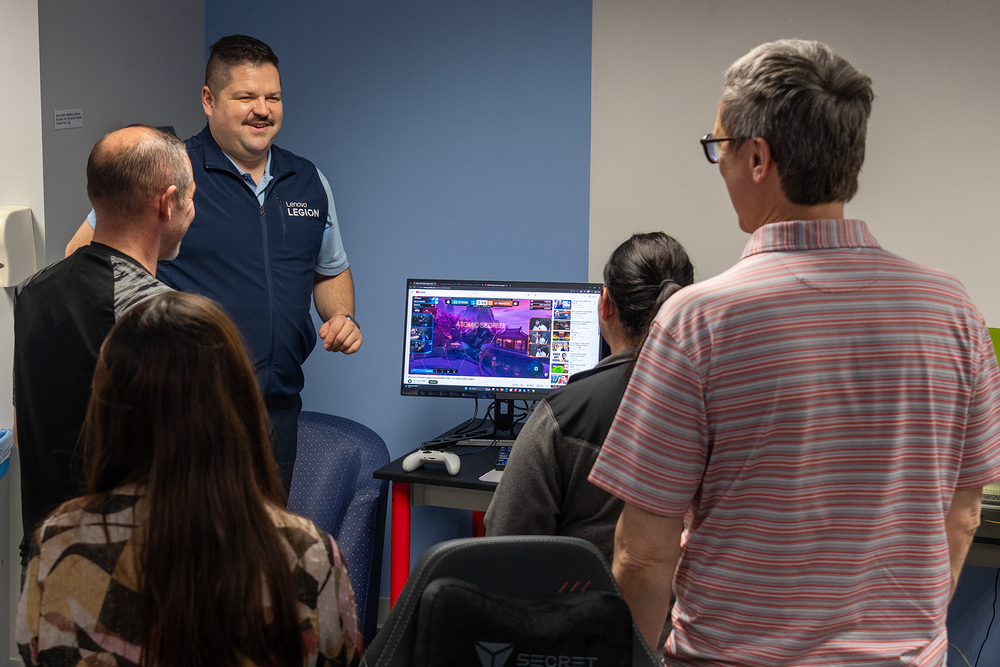
More than two dozen educators learn from industry leaders about bringing a booming varsity offering to local schools
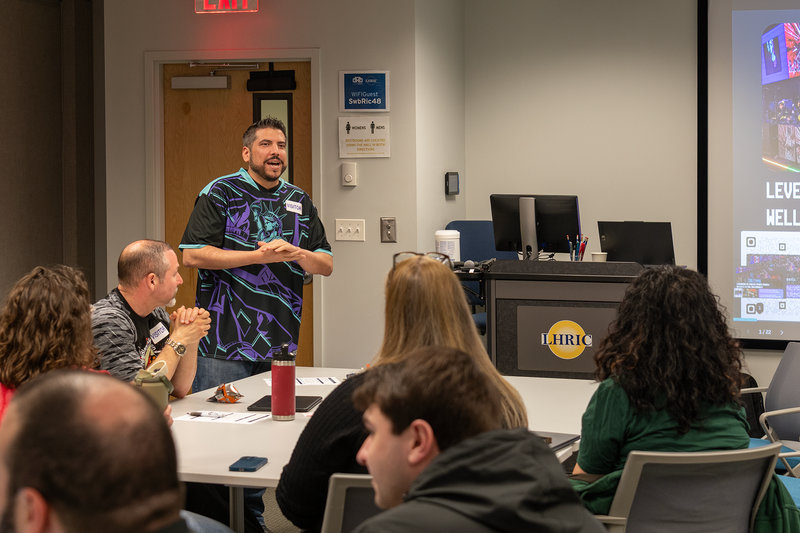
The mention of esports may bring to mind video games, which is fair enough, but it’s a limited association that overlooks the potential for a booming industry to positively impact students, especially those who may otherwise feel disengaged at school.
That point was part of a compelling case made by keynote speaker Lee Hyde, who addressed more than two dozen educators at the esports Playdate hosted by the LHRIC’s Instructional Technology team on April 14, 2026. Vendors and presenters dove deeply into the nuts and bolts—or perhaps the controllers and consoles—of implementing curriculum-oriented gaming initiatives that hold the promise of a transformative impact on schools’ culture.
“I’m talking about the kids who, at 3 p.m., haven’t found their interest to get involved in. We just want to figure out how to get them to go from disconnected to connected,” Mr. Hyde said during his opening address. “We want to figure out how to engage with these students who go home and put on a headset.”
Many if not most kids are gaming already—91% by his count—from varsity athletes and the stars of the school play to those on the honor roll and those still searching for their niche as students and as individuals.
Bearing the hefty title of North American esports Specialist at Lenovo, Mr. Hyde’s credentials reach back to UNC Chapel Hill, where he designed the renowned Carolina Gaming Arena. He brings a track record of pushing back against the traditional "basement" stigma of gaming by bringing it, and the students for whom it is a passion, center stage. Starting a small club and shepherding it to a major program benefited students tremendously, he said.
There are more than $25 million in scholarships out there for students pursuing gaming careers, much more if you consider related fields like broadcasting, design and production. More than 400 colleges and universities have esports programs. Mr. Hyde advised those on hand to dream big but start small. He also espoused three pillars of success: Radical Inclusion (all students are welcome); STEM/CTE Pipeline (the real-world benefits of a gaming background); and Social Emotional Learning.
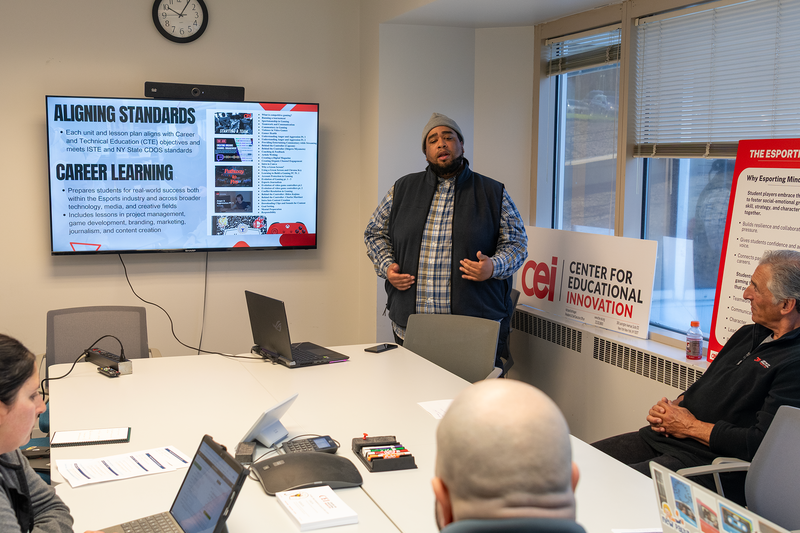
He was joined by presenters from P.C. University, Muzo, the Center for Educational Innovation (CEI) and the Empire State Scholastic esports Federation (ESSEF). Informative and engaging breakout sessions focused on logistics and implementation, boxes a superintendent, director of technology, or CTE coordinator would need to check in order to bring esports to their district. Throughout, however, the focus remained on students.
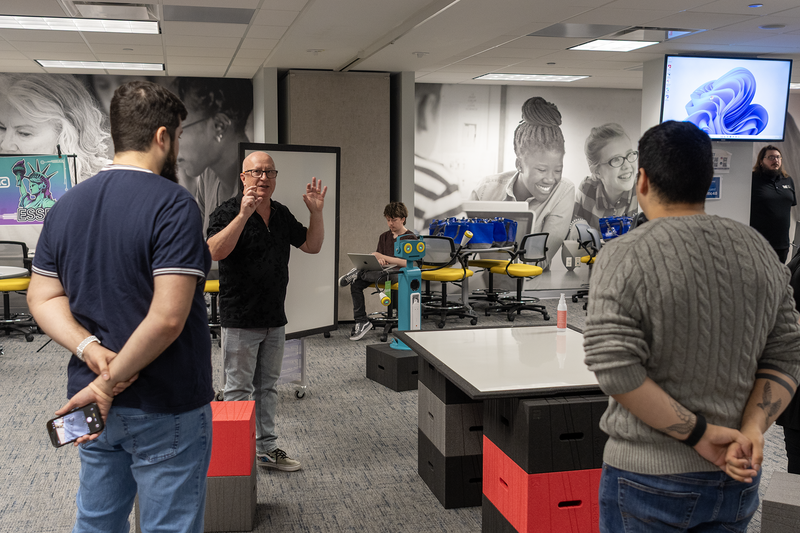
“You might be wondering what esports is all about,” Ms. Accardo said, and invited participants to make connections, find inspiration, and expand their thinking through breakout sessions on various topics and by participating in an immersive gaming arena.
That conversation included Scott Beiter and Kevin Calderin from ESSEF leading a discussion on how programs can strengthen student engagement beyond the game and PCU Distributors’ Michael Martin on creating inclusive and competitive balance in school esports.
In a conference room-turned-gamer haven for the day, the furniture and decor contrasted with even modern classrooms but jibed well with gamer culture. The things you put into a space, said Darren Buttle, CEO of Muzo-Works, determine how you learn.
“Learning is a team sport,” he told attendees. “What you really want to do is create an environment where you can connect, collaborate and learn.”
For more information about esports or other programs, tools or services supported by the Instructional Technology team, please contact LHRIC Coordinator Leslie Accardo at laccardo@lhric.org.